Introduction
Organizations today face a challenge of delivering training that’s consistent, engaging, and scalable across large or distributed audiences. Learning how to create e-learning videos is an effective way to solve this, since video-based learning offers flexible, scalable solutions that meet the needs of today’s learners. Accessible anytime and from any device, they allow organizations to deliver consistent, high-quality video-based learning experiences across diverse audiences.
Studies show (Muhammad Khan, Facts And Stats That Reveal The Power Of The ELearning Sector, ELearning Industry, 2022) that using video in e-learning enables people to absorb nearly five times more material than traditional classroom instruction while requiring 40–60 percent less time. Video engagement also improves active learning, supports better knowledge retention, and accommodates different learning styles, making it a key tool for modern digital learning strategies.
In this article, we’ll cover the main e-learning video formats, walk through the production process step by step, break down typical budgets, and explain how to make your videos accessible to every learner. 🚀
Summary
- Why are e-learning videos effective?
- How to create an effective e-learning video
- How much does it cost to produce e-learning videos: estimation and budgets
- How Blue Carrot can help your business
- Conclusion
Why are e-learning videos effective?
According to Statista, the global online education market is projected to generate $199 billion in revenue in 2026, and video plays a central role in that growth.
E-learning videos combine flexibility, consistency, and engagement, making them one of the most powerful tools for modern training and education. They offer measurable benefits for both learners and organizations, improving knowledge retention, accessibility, and scalability.
Key advantages include:
- Better knowledge retention: Pairing visuals with narration in e-learning videos engages both the auditory and visual channels of the brain, helping learners absorb and retain information more effectively.
- Flexible, self-paced learning: Learners can pause, rewind, and review content at their own pace, making interactive learning accessible anytime, anywhere, and on any device.
- Consistency and scalability: Videos provide a standardized learning experience for all users and easily scale for large or global audiences, making them ideal for remote teams.
- Support for diverse learning styles: By blending visuals, audio, and interactive video in e-learning, the content accommodates a wide range of learners. Features like subtitles, transcripts, and adjustable playback speeds strengthen learner-focused video creation.
- Higher engagement: Storytelling, dynamic visuals, and real-world examples hold attention better than static text, improving retention through e-learning engagement techniques.

Companies like Dow Chemicals have saved $34 million by switching to online learning, reducing training costs from $95 to just $11 per learner. IBM and other global organizations have achieved similar gains in cost efficiency and learner performance through video-based training.
Based on our observations across corporate L&D and EdTech projects, clients see the fastest ROI when video training is paired with structured, scenario-based content.
E-learning video creation: development options
When it comes to the production of an e-learning video, there are many ways you can carry it out — the e-learning course can be shot in a professional studio, a home studio, or with a generic web camera. It can come in the form of a podcast, screencast, animated video, etc., etc.
In order not to confuse you with the vast variety of options, we’ll only cover three basic ones you can choose from when making an e-learning video.
The choice of a particular option for e-learning video production is normally based on 1) available budget, and 2) the objectives you set for the project 🧐
📌 Live footage video
As the name implies, it’s a video that is shot live in a professional or home studio. When filming the course in a professional studio, you can access quality equipment and get a better picture. Studios may also offer some extra services — for example, you can hire their filming crew that will help you shoot the instructional video course.
👉 Studio example:
If you have access to basic shooting equipment — like a green screen, lighting, and camera — you can set up a studio at home and film an e-learning course there. If your budget is very tight, you can even record an e-learning course on a web camera, building an e-learning video in a so-called “talking head” format. In this case, just make sure you have enough natural light and know the basics of acting on camera.
👉 “Home” studio example:
📌2D and 3D animation
If you’ve ever questioned yourself about how to create animated e-learning videos for abstract or technical topics that are difficult to film, you are in the right place. Here, whiteboard animation is often considered the most affordable, so if your financial resources are limited, this type of animation would be a go-to option.
Animated e-learning course:
👉 Keep in mind that creating an animated video for an e-learning project makes sense if the course subject is simple and doesn’t include intricate concepts. Otherwise, the production process will involve creating complex animation sequences that may hit the project budget hard.
📌 Combined/hybrid video
This is a combination of two options — live footage and animation. In terms of production, combined videos are perfect for those who want to get a professional-looking video course with minimum investments. Such videos may come in different forms:live footage with custom animation, screencasts, stock videos, and so on.
👉 Example of live and animation combination:
Now we’ve covered three basic options you can choose from when creating an e-learning video. If you need more information, be sure to check our educational video production guide👇
How to create an effective e-learning video
Effective e-learning content creation is a structured process that includes planning, production, and post-production. From setting objectives and choosing the right format to scripting, filming, and editing, each stage ensures your video is clear, engaging, and learner focused.
Whether you’re creating training materials for employees, students, or customers, following a well-defined process helps deliver content that informs, retains attention, and scales effectively across audiences.
👉 Step 1. Pre-production: planning your e-learning video
A successful e-learning video starts with strong foundations. Pre-production is where you set clear goals, understand your audience, and shape the overall vision for the project. Careful planning at this stage ensures saving time and resources throughout the e-learning production process.
Understand your target audience.
Identify who your learners are — whether employees, students, or customers — and assess their prior knowledge, skill level, learning preferences, and accessibility needs. Audience insights help you tailor the tone, pace, format, and complexity of the content. Considering factors like preferred devices (desktop, mobile) or cultural background can also improve learner engagement and satisfaction.
Define clear learning objectives.
Pinpoint what learners should know or be able to do after completing the video. Strong objectives help focus the script, visuals, and flow of information. Align these outcomes with your organization’s training goals or educational standards to ensure the video delivers real value. Objectives also serve as benchmarks for evaluating the video’s success later on.
Choose the appropriate video format.
Select a video style that aligns with your content and learning goals. Screencasts are ideal for tutorial video development. Talking-head videos work well for expert insights, leadership messages, or adding a personal touch. Animation for educational content simplifies complex or abstract concepts with clear visuals. Scenario-based videos are effective for training soft skills and behavioral responses, while interactive videos boost engagement through decision points, knowledge checks, and branching paths.
Create a storyboard and script.
Draft a detailed visual roadmap showing how the content will unfold scene by scene. A clear storyboard helps align everyone involved — designers, animators, voice artists, and reviewers. Whether the video is developed internally or with an e-learning video production company, designers, animators, voice artists, and reviewers can use it to align on the intended visuals, narration, and learning flow. Write a concise, learner-focused script that uses simple language, logical progression, and clear callouts to guide attention. Mark key visuals, transitions, and interaction points where needed.

Plan for branding and tone of voice.
Ensure the video reflects your organization’s visual and messaging identity. Define consistent use of brand colors, fonts, logo placement, and animation style (if applicable). Establish a tone of voice — formal, conversational, motivational, or technical — that aligns with both your brand and the audience’s expectations.
Prepare for inclusivity and accessibility.
Design with video accessibility in mind from the start, not as an afterthought.
- Plan for accurate subtitles, closed captions, and transcripts to support diverse learning needs and screen-reader users.
- Use high-contrast visuals and avoid flashing elements or cluttered screens that could overwhelm or distract.
- Structure content for flexible access across video, audio, and text formats.
- Address localization needs early to create multimedia learning resources accessible to global audiences.
- Discuss the potential for interactive elements like quizzes, branching paths, or clickable callouts that support different learning speeds and styles.
Properly investing in pre-production saves time, reduces costly revisions, and ensures that your e-learning video is both learner centric and strategically aligned from day one.
👉 Step 2: Production of your e-learning video
With a strong plan in place, production brings your e-learning video to life. At Blue Carrot, we manage the entire process of creating e-learning videos — from talent coordination and studio setup to animation, voice-over, and final scene production — ensuring your project stays on track, on brand, and aligned with your learning goals.
📌 Talking-head videos
Perfect for expert messaging, leadership communication, or soft-skills training, talking-head videos bring a human connection to your learning content.
- Talent coordination: This process involves either our team handling speaker selection and briefing, or the client providing their own internal experts or professional actors.
- Studio booking and setup: We secure a professional studio or arrange an on-location setup with proper lighting, sound, and visual equipment.
- Filming day: Our crew, including a camera operator, sound engineer, and director, oversees the entire session, ensuring a natural delivery and brand-consistent visuals.
📌 Animated explainer videos
Animated videos are ideal for tutorial creation, simplifying complex topics, product training, or scalable knowledge delivery. They help break down abstract concepts into clear, visual narratives.
- Visual style and illustrations: We define the animation style based on your branding and audience needs, then create custom illustrations for every scene.
- Voice-over recording: We handle the casting, direction, and recording of professional voice-over talent — or, where appropriate, produce high-quality AI-generated voice-overs — to match the intended tone, accent, and pace.
- Scene-by-scene production: Each scene is built carefully following the storyboard, syncing visuals with narration and designing motion to support clarity and retention.
Throughout the production phase, Blue Carrot ensures every element — from visuals to voice-over — is expertly handled, so you can focus on the big picture while we manage the details of making e-learning video content successful.
👉 Step 3: Post-production & accessibility
Post-production video editing for e-learning is where your footage is shaped into a finished, high-quality learning product. At Blue Carrot, we manage the full post-production cycle — editing, enhancement, and final polishing — ensuring your video design is clear, engaging, and ready for delivery.
Editing and scene refinement
We follow the approved storyboard to assemble and edit footage or animation, refine scene transitions, remove pacing inconsistencies, and ensure the overall structure supports the intended learning flow. Visual clarity and logical sequencing are prioritized to enhance comprehension and reduce cognitive overload.
Voice-over synchronization and audio enhancement
Whether voice-overs are recorded by professionals or generated using AI, we synchronize narration precisely with visuals. We also enhance audio quality, balance background music and effects, and add supportive audio cues to reinforce key messages and maintain learner attention.
Visual polishing and motion design
To improve engagement and clarify complex concepts, we use modern tools for video creation to integrate motion graphics, on-screen text, annotations, and iconography. These visual learning enhancements are timed to support narration without overwhelming the visual field, helping learners focus on what matters most.
Localization and format adaptation
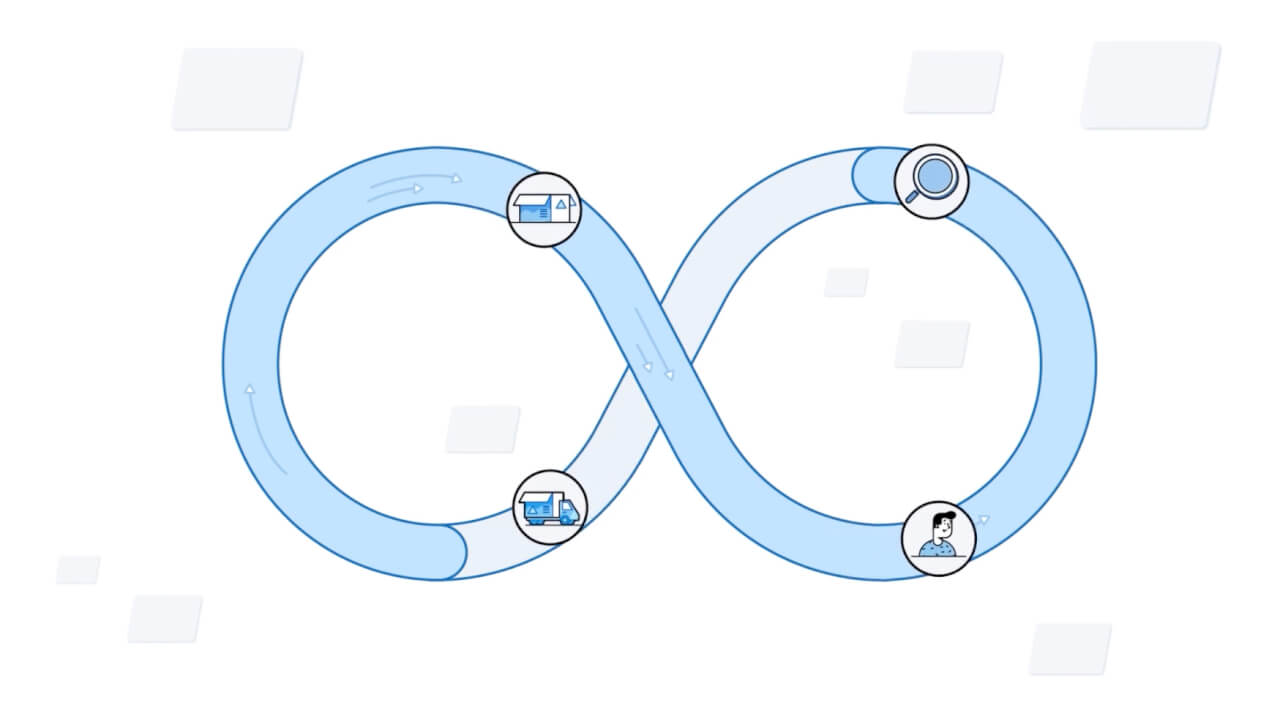
For international audiences, we prepare localized versions with multilingual voice-overs or subtitles and adapt visuals to ensure cultural relevance as needed. We also structure deliverables across multiple formats — video, audio, and text — ensuring compatibility with different platforms.
At every stage of post-production, Blue Carrot assures your e-learning video is polished, learner centered, and fully optimized for engagement, accessibility, and scalability.
👉 Step 4. Making e-learning video engaging and accessible for all learners
An effective e-learning video does more than deliver information — it actively engages learners and ensures accessibility for everyone. At Blue Carrot, we plan engagement strategies and accessibility features early, embedding them directly into the production workflow to create learning experiences that are inclusive, dynamic, and scalable.
📌 Implement interactive features to boost engagement
To turn passive viewing into active learning, we design interactive features that can be seamlessly embedded into your e-learning videos. These elements boost engagement and support better knowledge retention.
Interactive e-learning content includes:
- Quizzes, clickable hotspots, and knowledge checks;
- Branching scenarios and decision-based learning paths;
- Pause-and-think prompts for learner reflection.
We guarantee smooth integration with leading e-learning tools like H5P, Articulate Storyline, and Adobe Captivate, making it easy to align your content with any LMS or digital platform.
📌 Ensure accessibility by design
Accessibility is not an afterthought — it’s part of our initial planning. During pre-production and post-production, we:
- Script and integrate accurate subtitles and closed captions;
- Prepare transcripts compatible with screen readers;
- Design visuals with high contrast and avoid flashing or overstimulating elements;
- Ensure navigation is intuitive and works with keyboard-only input.
These steps help your content meet international standards like WCAG and ensure it’s usable by a wider, more diverse audience.
📌 Provide flexible, multi-format delivery
Design your e-learning content — from short videos to full-length modules — with adaptability at its core. Deliver it across multiple formats (video, audio, and text) so every learner can choose what works best for them:
- Adjustable playback speeds let users slow down complex explanations or speed through familiar topics.
- Modular segments allow learners to jump directly to the lessons they need.
We also localize content with multilingual subtitles, voiceovers, and culturally-adapted visuals to reach diverse global audiences.
How much does it cost to produce e-learning videos: estimation and budgets
When assessing the budget needed to build e-learning videos, keep in mind that production costs don’t come as a fixed price tag. They depend on subject complexity, type of video, and projected length, as well as extra requirements set for this project.
- Subject complexity — the more complex the subject, the more advanced the visual means (i.e. animation) need to be to explain it to the target audience. Plus, the more advanced animation gets, the more time it takes to produce it.
- Type and length of a video — the production costs directly depend on the type of the e-learning video. The video recorded in a home studio and enhanced with some animation overlays will be much more affordable compared to a course shot in a professional studio and enhanced with 3D animation.
- Additional requirements — to this category fall all the requirements that may come from the client regarding the course, such as the request to localize a course for several languages, record different voiceovers, and make the course compliant with some region- or niche-specific regulations.
Even though it may be difficult to predict some values regarding the costs of an e-learning video production, we still can list a few reference points that could help you better assess your potential expenses. Here is a breakdown of the prices of animated videos:
E-learning videos for medical companies — $680 per minute of produced video content (full-cycle).
E-learning videos on data privacy design — $700 per minute of produced video content (full-cycle).
Training videos for a consulting company — $715 per minute of produced video content (full-cycle).
Educational videos for Ozone Manufacturer — $915 per minute of produced video content (full-cycle).
👉 Aside from that, if we’re talking about videos recorded live, these start from $50 per minute for home/on-site studios and $100 per minute for professional studios. For a more detailed price breakdown, see our guide on how much does it cost to develop e-learning content.
These cost drivers align with independent research. Kapp and DeFelice’s ATD study found that producing one finished hour of e-learning can take from 73 to 214 hours of development time, depending on the level of interactivity (Kapp K., DeFelice R. Time to Develop One Hour of Training. ATD, 2009.). That range explains the wide spread in per-minute pricing across the industry.
How Blue Carrot can help your business
At Blue Carrot, we create e-learning videos that blend engaging storytelling, strong instructional design, and high-quality visuals. As a full-cycle production agency, we manage every stage — from concept development to final delivery — ensuring your content is effective and visually compelling. Unlike many custom e-learning development companies that outsource parts of the process, we keep instructional design, animation, and voice-over in-house.
With experience serving over 300 clients across industries, we know how to make e-learning video content that truly drives results:
- Instructional design, learning strategy, and script development;
- Storyboarding, style design, and custom illustration;
- 2D/3D animation production and professional or AI voice-over;
- Localization, multilingual adaptation, and accessibility design (subtitles, transcripts, WCAG compliance);
- Integration of interactive elements such as quizzes, branching scenarios, and assessments.
LearnCrypto – 2D animated lessons
Blue Carrot produced a series of 2D animated videos for a cryptocurrency education platform, simplifying complex blockchain topics into engaging, accessible lessons through clear storytelling and custom visuals.
Conclusion
Well-designed e-learning videos do more than deliver information — they change how people learn, retain knowledge, and apply new skills. When crafted with the learner in mind, video content becomes a lasting tool for education and training.
At Blue Carrot, we help organizations turn their learning goals into dynamic, story-driven experiences. From early planning to final delivery, we manage every stage of production to create videos that connect with audiences and support different learning styles.
If you’re interested in learning how to create a video for e-learning that will bring growth to your organization, book a free consultation with our team. 🤓