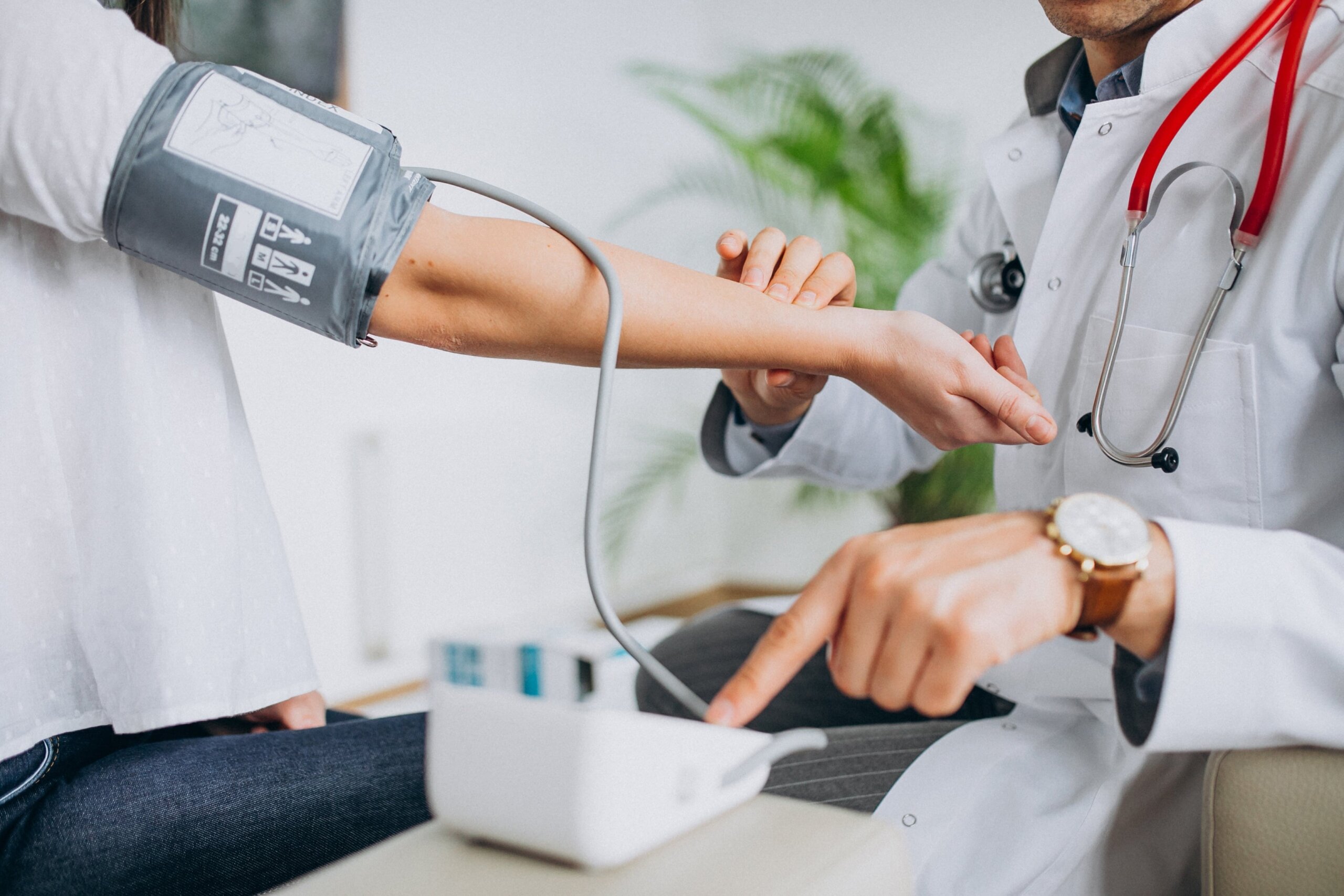

Despite advances in modern healthcare development, one in ten patients suffers from inappropriately provided services, and in many cases, this harm is seen as preventable. This turns into almost 3 million yearly deaths caused by unsafe care, according to the World Health Organization (Patient safety. WHO. 2023).
Nurses play a central role in patient safety, as they take responsibility for monitoring patients, administering medications, coordinating shifts, identifying emerging risks, and escalating concerns. This means, apart from the theoretical knowledge of safety policies, they should also know how to implement them in actual clinical situations.
Based on Blue Carrot’s background working with training aimed at clinical behavior, this blog gives a detailed insight into selecting appropriate frameworks and competencies, choosing proper learning approaches, designing a patient safety curriculum, customizing it, and evaluating it. 🧐
Summary
- Key takeaways
- Why patient safety training for nurses matters
- Frameworks for patient safety training
- Core competency areas for patient safety training
- Recognizing risks, monitoring situations, and escalating concerns
- Communicating safely during handoffs and critical updates
- Leading teams, providing mutual support, and speaking up
- Identifying patients and responding to changes in condition
- Preventing and controlling infections
- Managing medications safely
- How to build a patient safety training program for nurses
- How to measure patient safety training impact
- Custom vs. off-the-shelf patient safety training
- Conclusion
Key takeaways
- Patient safety education must start with incident analysis, auditing results, employees’ input, and root cause analyses, in order to establish whether an issue can be resolved with educational efforts or with system modification. The Quality and Safety Education for Nurses (QSEN) initiative, WHO curriculum framework, Team Strategies and Tools to Enhance Performance and Patient Safety (TeamSTEPPS) model, objectives set by the Joint Commission, and high reliability theory serve different purposes in healthcare safety training. All these approaches should be integrated depending on organizational risks and nurses’ obligations.
- Patient safety training should be competency based rather than limited to knowledge transfer. It must include skills in hazard detection and escalation, structured communication, effective teamwork, proper patient identification, infection prevention, and medication safety.
- Scenario-based learning, simulation practice, role play, and job aids assist nurses in demonstrating their competence in each area.
- The effectiveness of training should be measured in terms of observed performance, actual workplace practices, organizational safety culture, and outcomes for patients involved.
Why patient safety training for nurses matters

According to a report published by the HHS Office of Inspector General, 25 percent of all hospitalized Medicare beneficiaries had at least one adverse health outcome or suffered temporary harm (Adverse Events in Hospitals: A Quarter of Medicare Patients Experienced Harm in October 2018. Office of Inspector General | Government Oversight | U.S. Department of Health and Human Services. 2022). Based on physicians’ opinions, 43 percent of adverse events were potentially preventable. Apart from that, the CDC reported 518 thousand healthcare-associated infections in US acute care hospitals during 2023 alone (HAIs: Reports and Data.Healthcare-Associated Infections (HAIs). 2026). On average, 1 out of every 38 hospitalized patients suffers infection-caused complications on any given day.
An appropriately designed training program transforms organizational policies and lessons learned from incidents into actionable performance standards, which means that participants will actually apply them consistently during their work.
Frameworks for patient safety training
No framework covers all elements associated with patient safety education comprehensively. To design an effective patient safety training program, it is essential to combine appropriate elements from each of them and synthesize a proper program focused on particular needs and goals.
📌 QSEN: Quality and Safety Education for Nurses
Quality and Safety Education for Nurses provides a competency foundation for nursing patient safety education across six domains (QSEN Competencies | QSEN. QSEN. 2026):
- Patient-centered care means paying attention to patients’ values, preferences, and needs.
- Teamwork and collaboration relate to working successfully in nursing teams and collaborating with other professionals.
- Evidence-based practice involves integrating research findings with nurses’ experiences.
- Quality improvement implies using data to improve care delivery processes.
- Safety concerns include minimizing the hazards associated with health care delivery for both patients and health professionals.
- Informatics stands for utilizing technology to deliver safe patient care efficiently.
Still, this is not an instructional curriculum per se – instead, these QSEN competencies are a roadmap where instructional designers need to convert domain-related requirements into observable behavior examples, practical situations, and evaluation techniques according to specific threats.
📌 WHO Patient Safety Curriculum Guide
The WHO Patient Safety Curriculum Guide presents an adaptable international framework for educating nursing students and others involved in healthcare professions on patient safety (Patient Safety Curriculum Guide: Multi-Professional Edition. World Health Organization. 2011). The guide combines instructions on how to design, deliver, and evaluate training along with 11 core modules that include systems approach, human factors, learning from mistakes, teamwork, infection control, procedural safety, medication safety, and patient engagement.
However, it is important to note two important points:
- The WHO Patient Safety Curriculum is not something that learners have to follow step-by-step strictly.
- All materials included in the guide need to be adapted to fit specific nursing responsibilities.
Therefore, course designers and decision-makers must select the modules most relevant to their risks and supplement them with current national standards, internal policies, and local incident data. This turns the guide into a practical design reference with elements of scenario-based learning rather than a fixed, generic curriculum.
📌 Agency for Healthcare Research and Quality (AHRQ) TeamSTEPPS 3.0
AHRQ TeamSTEPPS 3.0 is an evidence-based training program that aims to translate effective teamwork practices into tangible and teachable behaviors. The curriculum consists of four major dimensions:
- Communication: Using proven methods to convey essential data.
- Teamwork leadership: Planning activities via briefings, huddles, and debriefings.
- Situation awareness: Staying aware of patients’, colleagues’, and the environment’s state.
- Mutual support: Providing help, giving constructive criticism, and questioning unprofessional decisions.
Regarding nursing training, TeamSTEPPS’ greatest value resides in its explicitness, supporting interprofessional education in such a way. With the guide’s help, it becomes possible for designers to develop training cases involving those particular behaviors instead of just talking about teamwork abstractly.
📌 The Joint Commission National Performance Goals

As of January 1, 2026, The Joint Commission introduced its National Performance Goals to replace the National Patient Safety Goals chapter. There are 14 goals addressing different domains related to healthcare safety – proper care delivery, safety culture, infection prevention, staff competence, and medication management, among others.
However, these are performance goals rather than curricula, implying that organizations should select topics for training based on applicable goals, nurse roles, and events occurring locally.
📌 High-reliability organization (HRO) principles
High-reliability organizations introduce principles that describe how teams working in complicated and risky environments avoid failures and deal with incidents properly (UC Davis PSNet Editorial Team. High Reliability | PSNet. AHRQ: Agency for Healthcare Research and Quality. 2020). Here are five fundamental concepts included in HRO frameworks:
- Preoccupation with failure means treating weak signals and close calls as learning opportunities.
- Reluctance to simplify entails not assuming oversimplified causes of safety issues.
- Sensitivity to operations implies constant monitoring of front-line circumstances.
- Commitment to resilience involves preparing teams to cope with surprises.
- Deference to expertise suggests deferring decisions to experts who have the necessary information.
In healthcare and medical e-learning, these concepts can form scenario-based training and debriefings aimed at cultivating learners’ abilities to recognize hazards, challenge oversimplifications, and act flexibly. At the same time, despite being essential components, HRO principles cannot guarantee high reliability without appropriate leadership, reporting systems, and workflows.
Core competency areas for patient safety training
No single framework covers every aspect of patient safety or provides a ready-to-use competency list for nurse training. However, our analysis of QSEN, AHRQ TeamSTEPPS 3.0, the Joint Commission National Performance Goals, and other patient safety guidance reveals six recurring competency areas that every strong patient safety training program should address.
👉 Recognizing risks, monitoring situations, and escalating concerns
Training for risk recognition should develop nurses’ awareness of patient, team, and environmental conditions. Scenarios may involve patient deterioration, increased workload, equipment problems, missing or conflicting information, procedural deviations, or near misses. Learners must use clinical judgment to interpret these signals and select the appropriate next action.
|
Stage |
What the nurse may observe |
Example behavior |
|
Early warning |
A clinical change, conflicting information, or a potential environmental or equipment hazard |
Verify the information, reassess the situation, and follow the relevant protocol. |
|
Growing concern |
Further deterioration, several related warning signs, or a delayed response |
Communicate the concern clearly and request an appropriate clinical review. |
|
Unresolved risk |
The initial response is inadequate, the concern is dismissed, or the situation continues to worsen |
Activate the organization’s escalation pathway and continue monitoring and advocating for the patient. |
*The specific threshold levels and paths for escalating concern will depend on the local policy, medical accountability, and the allowable scope of practice.
Simulation-based training is an especially effective training tool for this skill set due to its gradual unfolding. It allows checking whether learners recognize necessary clues, evaluate cumulative danger, and escalate concerns accordingly.
👉 Communicating safely during handoffs and critical updates
Safe communication goes deeper than just transferring pieces of information between clinicians. Training should prepare nurses to recognize what information matters, communicate it to the appropriate recipient, and confirm mutual understanding.
|
Unstructured update |
Structured update (SBAR) |
|
Mr. Lee’s blood pressure is low, and he does not look well. Could you check him? |
Situation: Mr. Lee has developed dizziness, and his blood pressure has fallen over the past two hours. Background: He was admitted this morning and had previously been clinically stable. Assessment: His condition has changed and requires review. Recommendation or request: Please assess him and advise on the next steps. |
SBAR is one of the multiple communication frameworks used in healthcare settings. The list of alternative strategies comprises such approaches as call-outs, check-backs, closed-loop communication, and hand-off protocols. Training designers should select the approaches that address the organization’s communication risks.
Paired role-playing exercises are recommended for practicing this technique. When assessing learners’ proficiency with SBAR, the focus should be on checking whether they have provided all critical details, whether they have expressed concerns effectively, invited questioning, and ensured mutual comprehension. Simply memorizing SBAR labels is not enough.
👉 Leading teams, providing mutual support, and speaking up

Training for effective collaboration should help nurses understand the care plan, their responsibilities, and the team’s current workload. It must also provide opportunities to address raising safety concerns and supporting colleagues under realistic workplace pressure. In patient safety e-learning, these skills can be practiced through branching scenarios that reproduce realistic teamwork pressures. Here is an example of how such a scenario would look.
Scenario: While preparing the patient for transportation, a nurse realizes that there is no monitoring gear according to the unit policy ready. The person who should prepare everything is dealing with multiple issues simultaneously, whereas the team leader insists on carrying out the procedure anyway. What should the nurse do?
Decision point 1: How should the nurse respond?
- Challenge the decision: State the concern clearly and ask the team to pause the transfer.
- Support the colleague: Offer practical assistance so the required equipment can be prepared without creating further delay.
- Remain silent: Allow the transfer to proceed and address the issue afterward.
If the learner decides to challenge the decision but the concern does not receive proper attention, or if practical assistance does not help, the scenario expands further.
Decision point 2: What should the nurse do next?
- Restate the concern: Explain the potential safety consequences more directly and again request that the transfer be paused.
- Escalate the issue: Follow the organization’s escalation pathway and involve the appropriate senior team member.
- Accept the decision: Allow the transfer to proceed despite the unresolved concern.
Assessment criteria, in turn, should cover awareness of the danger, timely intervention, effectiveness of chosen actions, and escalation.
👉 Identifying patients and responding to changes in condition
Accurate patient identification requires ensuring two things simultaneously: the individual is indeed who they are supposed to be and that the intervention, specimen collection, test result, and/or record belong to them specifically. Thus, patient identification training should reflect the organization’s policies and give nurses opportunities to practice applying them in relevant clinical situations. Special attention should be given to this matter:
- Prior to administration of medications or transfusions;
- Prior to specimen collection and labeling; and
- Prior to procedures involving verification of the correct patient, procedure, and body part involved, among others.
Also included are high-risk moments such as transferring and handoffs when the responsibility shifts, missing identifiers, systems alerts, or similar patient name or information records.
Training scenario examples could involve interrupted tasks, similar patient names, lack of ID band, etc., leading to recognizing errors, pausing processes until resolving issues, and proceeding further.

👉 Preventing and controlling infections
Infection control is a central part of patient safety for nurses and depends on applying proper prevention practices throughout each care episode. Training should present hand hygiene and personal protective equipment as interconnected parts of Standard Precautions rather than isolated actions.
|
Examples of behaviors to cover in training |
|
|
Before care |
|
|
During care |
|
|
After care |
|
Nursing training should recreate this flow of events using actual tools, settings, and procedures applied during work. Observations and simulations involving errors purposefully made by instructors help determine whether trainees notice the danger of contamination and fix mistakes before continuing.
👉 Managing medications safely
You cannot assume that medical errors with medication always prove gaps in the nurse’s education or training. There could be issues associated with unclear prescriptions, inadequate information registration, technological problems, disruptions during work, or inefficient workflows. It is better to carry out a systems-based analysis before deciding how to fix things (RCA2 Improving Root Cause Analyses and Actions to Prevent Harm. National Patient Safety Foundation. 2015).
|
Observed pattern |
Possible training-related factor |
Possible system-related factor |
|
Incorrect dose |
Cannot apply the required calculation or protocol. |
Order, unit, or label is unclear. |
|
Skipped verification |
Does not understand the process. |
Scanner is unavailable or the workflow encourages workarounds. |
|
Missed allergy |
Does not know how to check or escalate. |
Records are incomplete, missing, or alerts are excessive. |
The same performance issue can stem from a wide variety of causes, so instructional teams need to identify any competency gaps before developing a training program.
Once proven by evidence, you can address competency gaps through realistic simulation involving genuine records and interface interactions. Instruct the learners to detect inconsistencies, make decisions, and inform others about issues.
How to build a patient safety training program for nurses
It might seem tempting to treat the presented frameworks and competencies independently and develop learning modules accordingly. This approach can result in generic training that is disconnected from reality since it contradicts the core recommendation about designing course content based on actual organizational issues. Therefore, we can highlight five key steps needed to create a program based on the specific safety problem.
- Firstly, conduct an analysis by reviewing incidents, close calls, audit reports, observations, and even staff feedback. Use root cause analysis to determine whether the problem reflects a nursing skill gap or failures in staffing, technology, policies, or processes.
- Then select proper guidance according to your findings. To determine the scope, rely upon QSEN and WHO standards. Identify appropriate teamwork behaviors through TeamSTEPPS. Define key objectives according to the Joint Commission’s strategic priorities. Finally, reinforce learning within a high-reliability environment.
- Further on, describe observable nurse behaviors related to the issue, such as detecting certain warning signals, giving structured handoffs, identifying patients’ identities, reporting adverse events, etc.
- Afterward, select effective instructional techniques that match each targeted behavior. They can include simulated cases for recognizing risks, branching scenarios for communication, simulation exercises for procedural skills, and checklists/job aides for standardized tasks.
- And last but not least, validate your program through pilot testing with clinical educators and practicing nurses. Educate managers on proper reinforcement of nurse behavior within a just culture. Track behavioral change by assessing nurses’ competencies and practices.
Adherence to this systematic approach ensures that patient safety training is aligned with recognized risks, the facility’s needs, and the specific behavioral models that nurses are expected to follow in practice.
How to measure patient safety training impact
Completion rates and quiz scores indicate engagement and short-term retention. However, these figures alone cannot tell whether nurses implement safety behaviors during work. An evaluation system should include both competency assessments (via simulation, scenario-based, or observed demonstrations), along with real-world performance metrics (such as following protocols, conducting handoffs, escalating incidents, or applying safety tools). It must measure openness to speak up, near-miss reporting, and certain adverse patient safety events (falls, medication errors, infections, deteriorations).
When measuring, compare outcomes to a pre-training baseline. Analysis should occur periodically, depending on risks. Be cautious with interpretation, as changes in reporting culture, staffing composition, technological innovation, or any other operational factor may influence the results. Measurement should correspond with adverse event frequency, number of nurses evaluated, and the selected safety outcome.
Custom vs. off-the-shelf patient safety training
Organizations considering what are the best e-learning companies for healthcare should look beyond provider rankings and evaluate clinical expertise, instructional design capabilities, customization options, and experience creating training around measurable behaviors.
Off-the-shelf patient safety courses suit broad awareness campaigns, common regulatory topics, and foundational material that applies across organizations.
Customized training material will be preferable if the identification of risks involves elements related to local workflow processes, policies, technologies, patient demographics, incident frequency trends, or decision-making responsibilities unique to a particular position. You could always explore mixed approaches involving combining standard foundational courses with customized scenarios and assessments.
Blue Carrot provides custom corporate e-learning development for clinical education teams, translating safety frameworks, event data, policies, and workflows into realistic scenarios, assessments, and job aids. The result is training built around the observable behaviors nurses need to demonstrate in clinical practice.
Conclusion
Effective patient safety training for nurses relies on local evidence rather than any universal content lists. The point is that nurse patient safety education must recognize behavioral determinants of risk factors, simulate those behaviors within a realistic practice environment, and integrate these behaviors into the day-to-day operations. Training effectiveness should be assessed through competence and workplace performance, not completion rates and quiz scores alone.