
Medical education requires detailed visualizations, which makes e-learning video production a useful part of training. Medical education videos are a great way to teach clinical procedures like suturing wounds or taking blood samples and to explain complex medical concepts.
The practical benefits of video-based approaches in health education are confirmed by a large body of research. A meta-analysis concludes that online video-based education can teach basic surgical skills as effectively as online conventional teaching methods (B. P. Mao, M. L. Teichroeb, T. Lee, G. Wong, T. Pang, H. Pleass. Is Online Video-Based Education an Effective Method to Teach Basic Surgical Skills to Students and Surgical Trainees? A Systematic Review and Meta-analysis. Pubmed.Ncbi.Nlm.Nih.Gov. 2022). Another systematic review shows that videos bring measurable results in learning surgical skills at different levels of training (Samy Cheikh Youssef, Abdullatif Aydin, Alexander Canning, Nawal Khan, Kamran Ahmed, Prokar Dasgupta. Learning Surgical Skills Through Video-Based Education: A Systematic Review Pubmed.Ncbi.Nlm.Nih.Gov. 2022).
Drawing on Blue Carrot’s experience in producing video-based learning in medical education, this article explores the main formats of educational videos for medical training, the evidence behind their use, and key production practices to follow.
Summary
- Key takeaways
- What is video-based learning in medical education?
- Why video-based learning fits medical education so well
- Main formats of video-based learning in medical education
- Matching video format to learning goals
- The evidence base for video-based learning in medical education
- Production considerations specific to medical videos
- Video length, style, and formatting recommendations
- Common pitfalls in video-based learning for medical education
- Summarizing video-based learning in healthcare
Key takeaways:
- Videos can effectively visualize dynamic concepts, different clinical experiences, and patient encounters.
- While medical videos are a common choice to train procedural and surgical skills, they can also teach decision-making, diagnostics, and communication.
- Research supports the use of online videos for procedural skill knowledge acquisition and retention.
What is video-based learning in medical education?
Video-based learning in medical education is an educational approach that relies on videos to share medical knowledge and train procedural skills. Medical students and trainees can learn from watching demonstrations, explanations, and simulations. Videos are typically used within a broader curriculum to help students understand how to perform clinical procedures and learn theoretical concepts before practice.

Why video-based learning fits medical education so well
Medical education videos are well suited for healthcare training as they combine knowledge sharing with visualizations. Some of the benefits of video-based learning in medical education include:
- Visualizations of dynamic concepts. Procedural videos allow educators to show movement, timing, and sequence to realistically reproduce clinical procedures. Students can see a procedure step by step, which helps them perform it with confidence later on.
- Access to rare clinical cases. Educational videos for medical training can show conditions that students rarely encounter during their placements, but still must know how to manage. For example, you can also film authentic patient encounters to teach physical examination and communication skills.
- Alignment with the cognitive load theory. Videos can combine spoken and visual explanations, which can facilitate information processing and reduce cognitive load. However, you will need instructional material design services to create videos that are easy to digest and don’t include unnecessary animations and distractions.
- Self-paced learning. Videos can provide students with additional information and case studies to watch after classes. Learners can access them through a learning management system (LMS) at any time and rewatch.
- Scalability and cost efficiency. Medical education videos can be delivered repeatedly to a large number of learners. Since you can easily distribute them online, the cost of the initial production process is the main expense.
- Standardized teaching. Every student sees the same video, which ensures consistent training across a medical education institution or organization. Standardization also simplifies assessment, as educators can evaluate students using the same criteria.
Video-based learning is a universal approach to sharing knowledge that effectively supports other learning activities. The choice of formats ranges from short microlearning videos (explaining a specific concept or skill) to longer videos that illustrate complex topics in depth. Video can also support different training needs, including compliance training, onboarding, product training, and skills development. You just need to make sure a video is well planned and aligned with your learning objectives.
Main formats of video-based learning in medical education
Medical education videos can look very different depending on the topic covered and goal. You can film a real heart surgery or use custom e-learning content development services to create animations. Below are the most common video formats to consider.
📌 Procedural and surgical videos
These videos demonstrate clinical procedures, surgeries, and physical examinations step by step. Typical examples include suturing, airway management, and surgical techniques.
These are real-life recordings with internal or external capture through overhead surgical microscopes, boom-mounted cameras, endoscopes, or third-person camera operators. These videos must have high resolution and follow a logical sequence that shows how the procedure is performed.
Procedural and surgical videos help learners see expert performance, including hand movement and instrument handling, before trying the same procedure themselves. They can also be a preparatory step before simulation-based learning in medical education.
📌 Pre-recorded lectures
Lectures are useful for delivering medical education online, enabling students to watch pre-recorded materials when they have time. Such videos may lack engagement but allow you to share theoretical knowledge and organize asynchronous learning. This format also allows students to revisit difficult material and make notes at their own pace.
Lectures are also a common choice for employee training video production. You can use them to inform medical staff about new protocols, policy updates, or regulatory requirements without the need to gather everyone offline.
Lectures are often followed by quizzes and practical tasks to recap the information and consolidate knowledge.
📌 Educational animations
Animated medical explainers are typically used to visualize complex, abstract, or microscopic concepts. They are a great alternative when real filming is impossible or less effective. Common examples include animations of pharmacological mechanisms, immune responses, and molecular processes.
For more realistic visualizations, you can also consider 3D medical animations with advanced computer graphics. Check examples of explainer animations created by our team for healthcare and other fields.
📌 Case-based videos
Case-based interactive videos are built around clinical cases and patient scenarios. They often present information progressively to keep learners engaged through additional questions and tasks. You can incorporate a patient’s history, physical examination, laboratory results, treatment options, and other details to make cases more representative of clinical settings.
Case-based videos are a useful addition to group activities. Students hear a patient’s story and practice diagnostic reasoning and decision-making skills.
📌 Standardized-patient videos
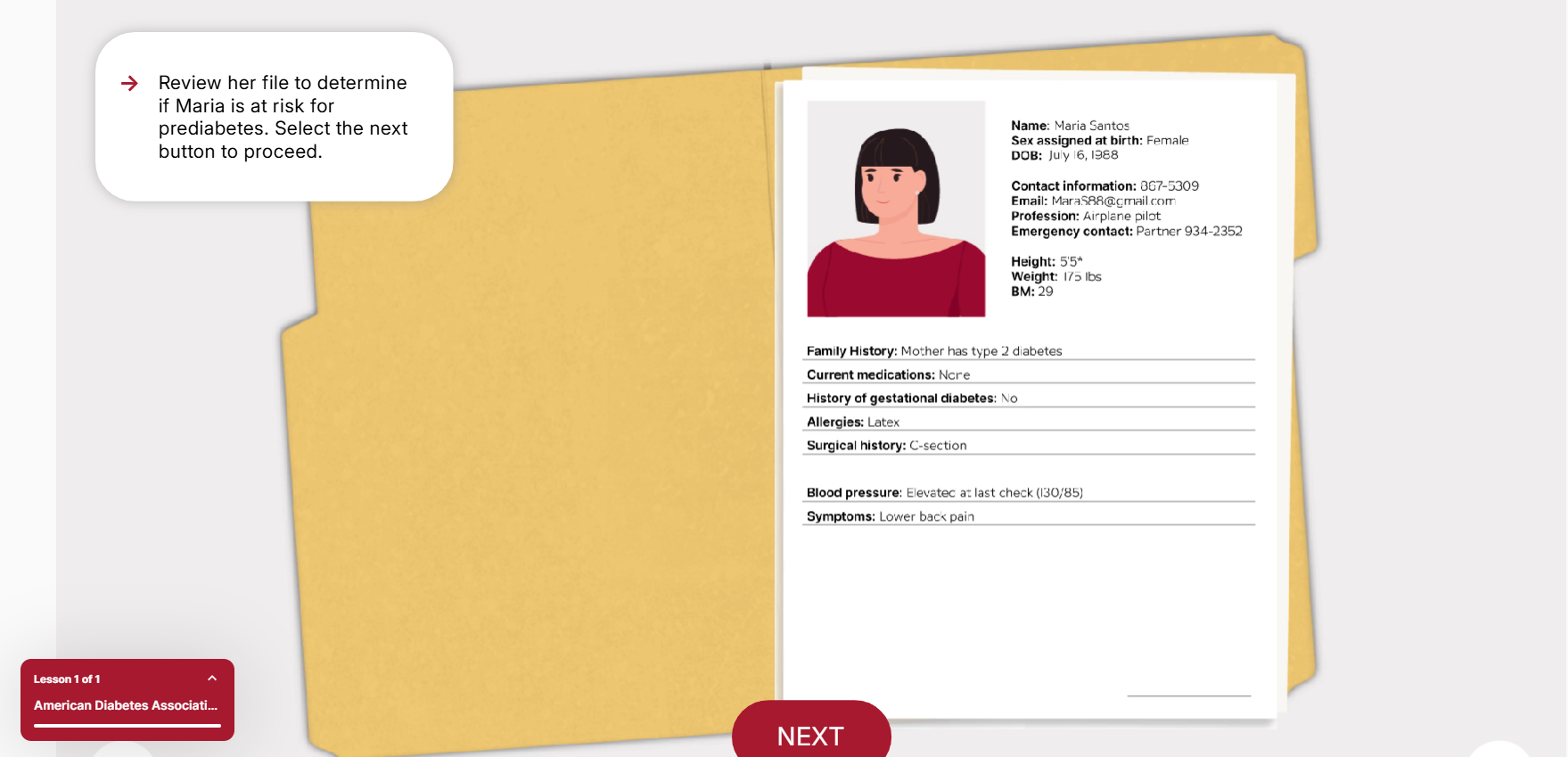
Standardized-patient recordings include trained actors playing patients. The actors follow predefined clinical scenarios with common conditions and symptoms. Such videos are commonly used to train communication and interpersonal skills. Students can see how to take a history, ask about informed consent, or share bad news. Alternatively, you can ask students to work in pairs and record their own videos to practice the acquired skills and self-reflect.
📌 Screen recordings
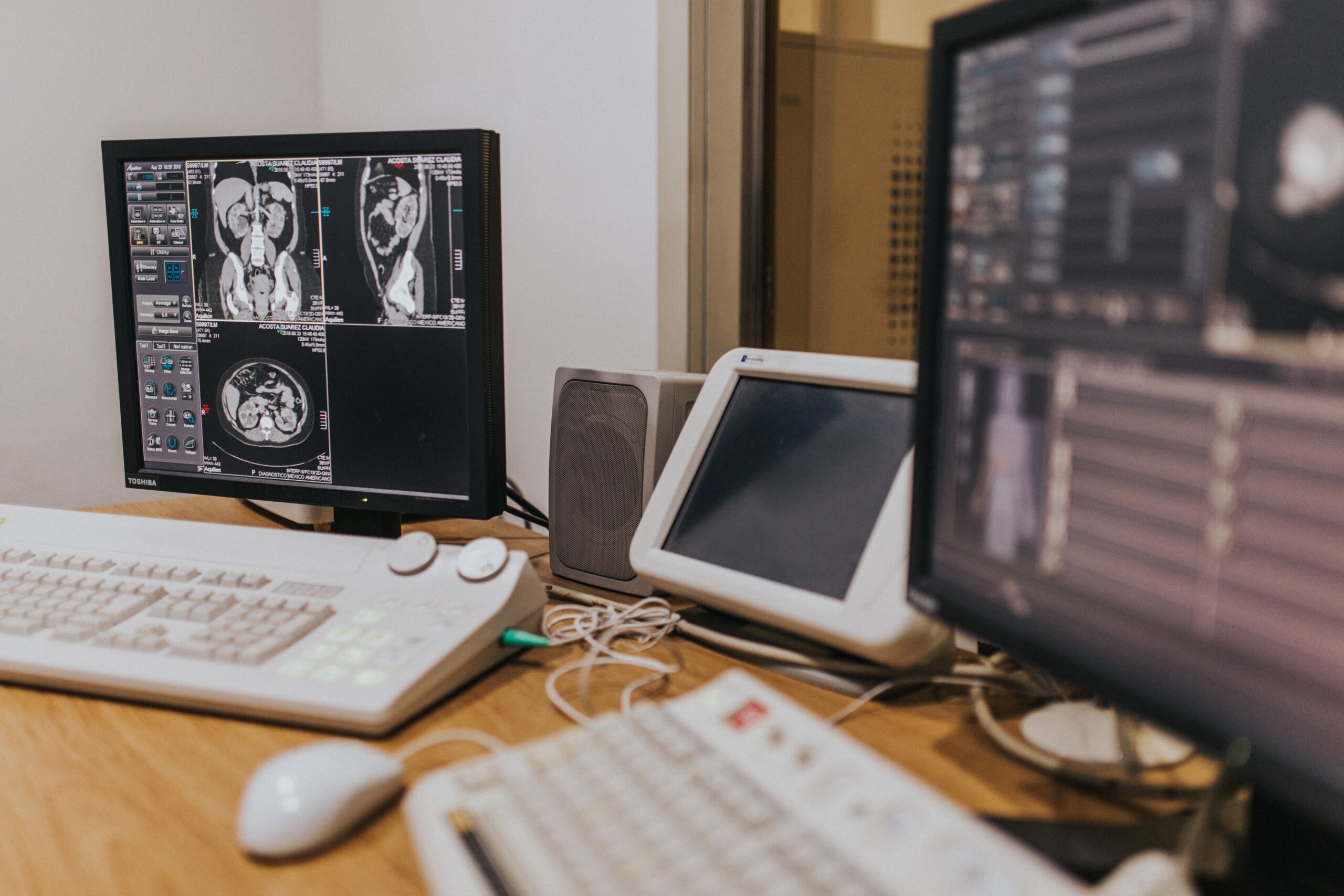
These videos capture a computer or tablet screen where an educator shares an instruction or task. They are particularly relevant for training in the use of health records, medical imaging, clinical databases, decision-support systems, and other digital tools.
Screen recordings are easy to produce and don’t require substantial investment. However, the quality of recordings depends a great deal on the technical literacy of an educator and their ability to explain the process or task.
📌 Coaching videos
Video-based coaching is used specifically to provide instruction and improve performance. A domain expert analyzes a student’s performance and demonstrates the behavior with the necessary improvements. These videos are typically combined with deliberate practice and instructor feedback and are highly personalized.
Matching video format to learning goals
When incorporating video-based learning in medical education, you must first understand the overall goals of your training. Videos must support larger objectives and integrate well with the rest of the learning activities. Second, it’s important to set the learning goal for each specific video. For example, a screen recording of an electronic health record (EHR) system aims to teach students how to create an entry and enter patient information. A surgical video of suturing can demonstrate how to align tissue correctly to lower scarring. Understanding the goal will help you select the right instructional design approach and smoothly combine video with other learning activities.
The table below sums up what each video format is good for.
|
Video format |
Learning goals |
|
Procedural and surgical videos |
Prepare for procedural practice; understand what critical steps should be taken in clinical settings |
|
Pre-recorded lectures |
Gain theoretical knowledge about medical concepts, mechanisms, terminology, and principles |
|
Educational animations |
Understand dynamic or invisible biological processes |
|
Case-based videos |
Develop clinical reasoning and diagnostic skills; learn to interpret clinical history, lab results, and symptoms |
|
Standardized-patient videos |
Learn to conduct patient interviews; develop communication skills |
|
Screen recordings |
Master digital workflows; learn to use modern healthcare systems and equipment |
|
Coaching videos |
Improve performance through identifying errors and instructor feedback |
The evidence base for video-based learning in medical education
The practical impact of video-based medical education has been studied across different medical contexts. A systematic review shows that online videos are a particularly valuable educational tool for procedural skill knowledge acquisition and retention (Komal Srinivasa, Yan Chen, Marcus A Henning. The role of online videos in teaching procedural skills to post-graduate medical learners: A systematic narrative review. Pubmed.Ncbi.Nlm.Nih.Gov. 2020). In some cases, their effectiveness is comparable to bedside teaching. The research on training introductory pediatric clinical examination skills concludes that video group scores are within 10 percent of the bedside group (Ann George, Duane Blaauw, Lionel Green-Thompson, Christina Hajinicolaou, Nilesh Lala, Kiran Parbhoo, John Rodda, Sithembiso Velaphi, Udai Kala, Preeteeben Vallabh, Ziyaad Dangor & Sanjay G. Lala. Comparison of Video Demonstrations and Bedside Tutorials for Teaching Paediatric Clinical Skills to Large Groups of Medical Students in Resource-Constrained Settings – International Journal of Educational Technology in Higher Education. SpringerLink. 2019).
There is also narrower research on the effectiveness of specific video formats. A recent article on the implementation of video-based coaching (VBC) in orthopedic surgery residency training claims that VBC can promote the development of nontechnical skills. It also increases students’ confidence and preparedness for orthopedic surgeries, serving as a promising supplement to traditional approaches (Samir Sakaria, Daniel Walsh, Shreya M. Saraf, Mary K. Mulcahey. Implementation of Video-Based Coaching in Orthopaedic Surgery Residency Training. Pmc.Ncbi.Nlm.Nih.Gov. 2025). A randomized controlled study of the effect of motion-graphic video-based training on the performance of operating room nurse students also shows positive results. The researchers found that videos help improve the performance of operating room nurse students during cataract surgeries (Behnaz Fatahi, Samira Fatahi, Sohrab Nosrati, Masood Bagheri. Effect of Motion-Graphic Video-Based Training on the Performance of Operating Room Nurse Students in Cataract Surgery in Iran: A Randomized Controlled Study – PMC. Pmc.Ncbi.Nlm.Nih.Gov. 2023).
If you are considering using videos within your medical training program, we recommend that you evaluate whether videos are the best approach in your clinical context. You can track the impact of different learning activities to develop a program with the best learning outcomes. Make sure to gather data before and after implementing medical training videos to assess the change. You can also ask students what they think about the videos provided to gather feedback directly.
Production considerations specific to medical videos
Medical videos differ from regular educational videos because they require high precision and information accuracy. You must also comply with ethical standards and other requirements listed below. At Blue Carrot, we account for these requirements at every stage, from content development and expert review to production and quality assurance.
👉 High medical accuracy and visual precision
Since students will replicate what they see, medical videos require exceptional accuracy. They should reflect current protocols and approaches.
The need for visual precision also affects the filming process, particularly for procedural videos. You need to use medical devices that provide high-quality internal views and select appropriate camera angles for external images.
👉 Quality audio narration
Although medical videos are highly illustrative, a lot of valuable information comes from additional comments. Audio is particularly important for clinical reasoning or procedural explanations when you need to instruct students on the timing, sequence, and reasoning. It’s also necessary to ensure smooth synchronization between narration and visual content.
👉 Subject-matter experts
The content for video-based medical education must be developed or at least reviewed by clinicians. They must be qualified in the related field and know the current clinical guidelines. It increases production costs and timeline, but ensures the desired accuracy.
You should also have someone to regularly review educational materials. Treatments change, and you may need to update videos accordingly.
👉 Focus on critical steps
Some medical videos do not need to show an entire procedure, especially if it lasts for hours or includes many repetitive movements. It’s important to include what really matters and allow viewers to understand how to repeat the same procedure. You will need to add voiceover, annotations, and combine video cuts with slow motion when appropriate.
👉 Active learner participation
The research on video use in medical education shows that medical students are highly motivated to engage in self-directed learning (Eng-Tat Ang, Siti Nabihah Binte Abu Talib, Mark Thong & Tze Choong Charn. Using video in medical education: What it takes to succeed. National University of Singapore. 2017). Therefore, they must actively participate in the training process rather than passively watch lectures. Depending on the end goal, videos can be combined in a program with self-recording, peer-to-peer activities, and direct feedback.
👉 Privacy and consent
When creating video content for medical students or continuing medical education (CME), you must follow privacy requirements and ethical standards. Patients should be informed about the recording, know all the consequences, and provide written informed consent. You must also anonymize patient information and case materials, making sure no one can identify a specific person from the shared story.
👉 Frequent updates
When incorporating medical videos into the curriculum, educators need to plan for future updates. It’s better to create videos on topics that are less likely to become outdated. For subjects that are likely to change, you may consider more cost-efficient formats like instructor-led lectures or screen recordings.
Video length, style, and formatting recommendations
To create a video that facilitates training, you must choose the right length, style, formatting, and design. Otherwise, medical videos may be difficult to comprehend, which directly affects learning outcomes. Below are the best practices our team follows when creating video content for our clients.
📌 Video length
- No single optimal length.
- Depends on the complexity of the subject, learning objective, and learner’s level of expertise.
📌 Style recommendations
- Prioritize clarity and clinical accuracy.
- Use multiple angles when needed to ensure an unobstructed view.
- Use close-ups for critical steps.
- Favor clarity over elaborate visual effects.
📌 Formatting rules
- Split video into smaller learning units (e.g., intro, preparation, procedure, complications, and post-procedure management). Where appropriate, add a knowledge check at the end of the video or logical unit to improve engagement and knowledge retention.
Common pitfalls in video-based learning for medical education
Good videos help achieve a learning objective and are logically connected to other educational activities. Bad videos may be ineffective for multiple reasons, from messy design to oversimplified clinical concepts. Here are the main issues to watch out for when implementing video-based learning in medical education.
👉 Lack of instructional design
If you have no instructional design training, you risk creating a video that will not match your learning objectives. Filming a clinical procedure or lecture only seems easy. In reality, you need to select a suitable video format, ensure logical sequencing of information, and incorporate assessments.
👉 Too much focus on production over educational value
High-quality cameras, animations, lighting, and sound matter, but learning effectiveness is more important. Some educators may focus too heavily on creating professional-looking videos that they underestimate the practical value of information. As a result, such videos may include inaccuracies or provide outdated instructions.
👉 Cognitive overload
When videos include too much information, visual effects, audio narration, and other details, they can overload students. Learners get tired too quickly and stop following the content. This harms knowledge processing and reduces the effectiveness of educational videos for medical training. Therefore, you should only include the content that has practical value and aligns with what you want to train.
👉 Treating video as a lecture recording
Sometimes, recording a 60-minute lecture matches your learning objective. However, in most cases, long periods of passive viewing can harm engagement and learning outcomes. It’s important to combine theory with demonstrations, practical tasks, cases, and other activities.
👉 No professional review
Qualified professionals should participate in video creation end-to-end. Make sure to ask experienced clinicians to review the content for correctness and relevance. Ideally, you should engage several reviewers to double-check the terminology and clinical procedures.
👉 Oversimplified clinical concepts
In the attempt to make content easier to understand, some educators remove critical details and nuances. As a result, the quality of medical education videos drops, and they are no longer as accurate as required. Sometimes, it may be necessary to indicate that the demonstration includes simplified scenarios, but learners must know about this.
👉 Low student engagement
When educational videos lack interactive breaks, student engagement suffers. Learners cannot keep the same level of attention unless they are regularly engaged. Depending on the learning objective, video content can contain embedded questions, clinical decision tasks, patient cases, short quizzes, and reflection prompts.
👉 Demonstrating procedures without context
When a clinical procedure is shown in isolation, students may fail to understand when to apply it. Videos can include indications and contraindications, preparation, patient positioning, equipment, safety precautions, common mistakes, possible complications, and post-procedure care. This helps students apply the demonstrated procedure more successfully in real life.
Summarizing video-based learning in healthcare
Video-based activities are a great supplement to other medical learning activities, as they are highly illustrative. Videos allow educators to film or visualize complex clinical procedures, preparing students for simulations and offline practice. Besides clinical skills, medical videos are also helpful for training communication techniques, sharing rare cases, and coaching medical students.
The success of incorporating video content in medical training depends on setting the right learning objectives and instructional design. If you need help with creating video content or animations, contact our team for professional video production and content development services.